
Download the Strategic Vision of CoRAI here
adopted at the CoRAI Meeting on 5 March 2026
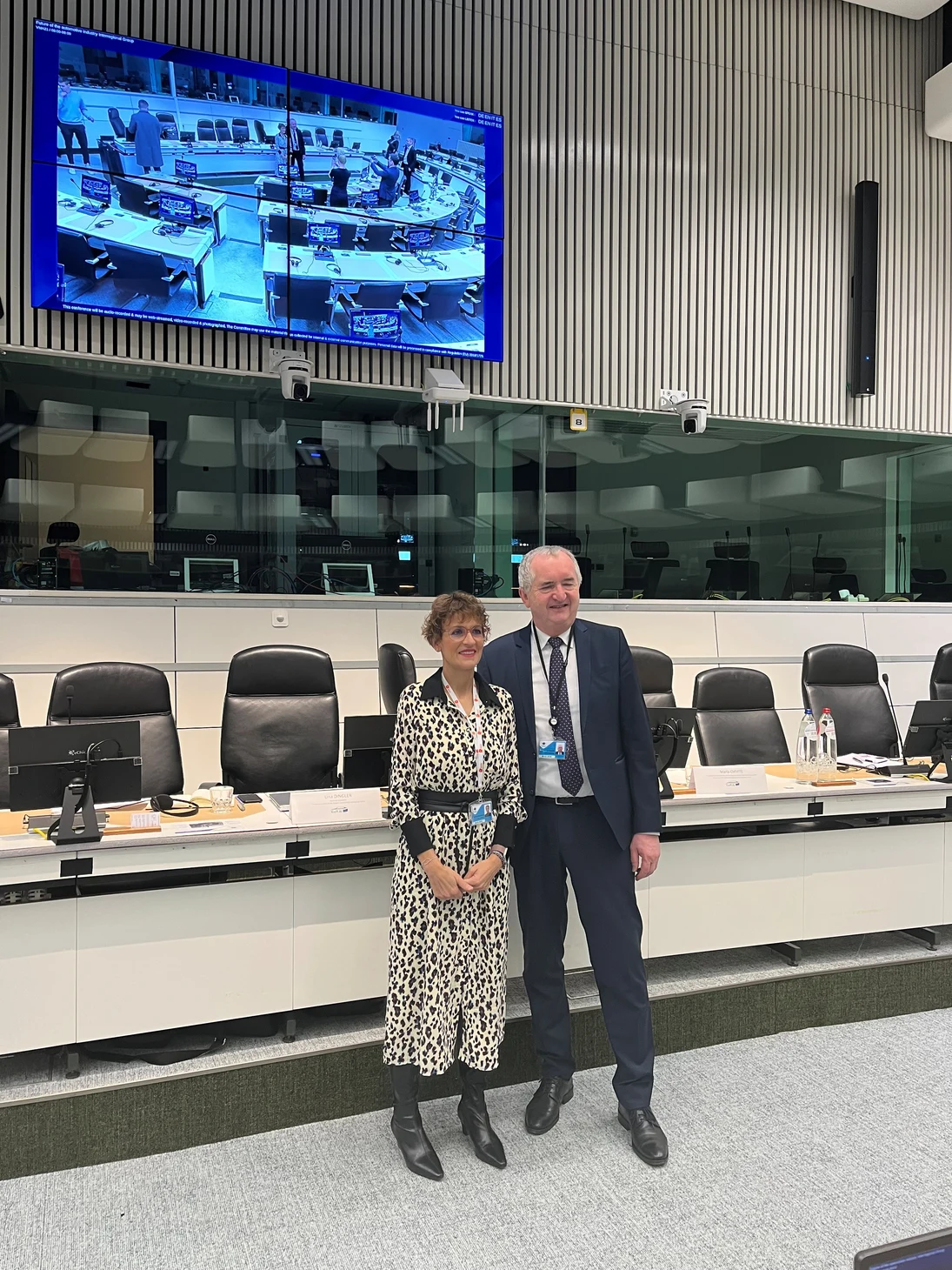
CoRAI Co-Chair María Chivite and CoRAI Chair Thomas Schmidt.
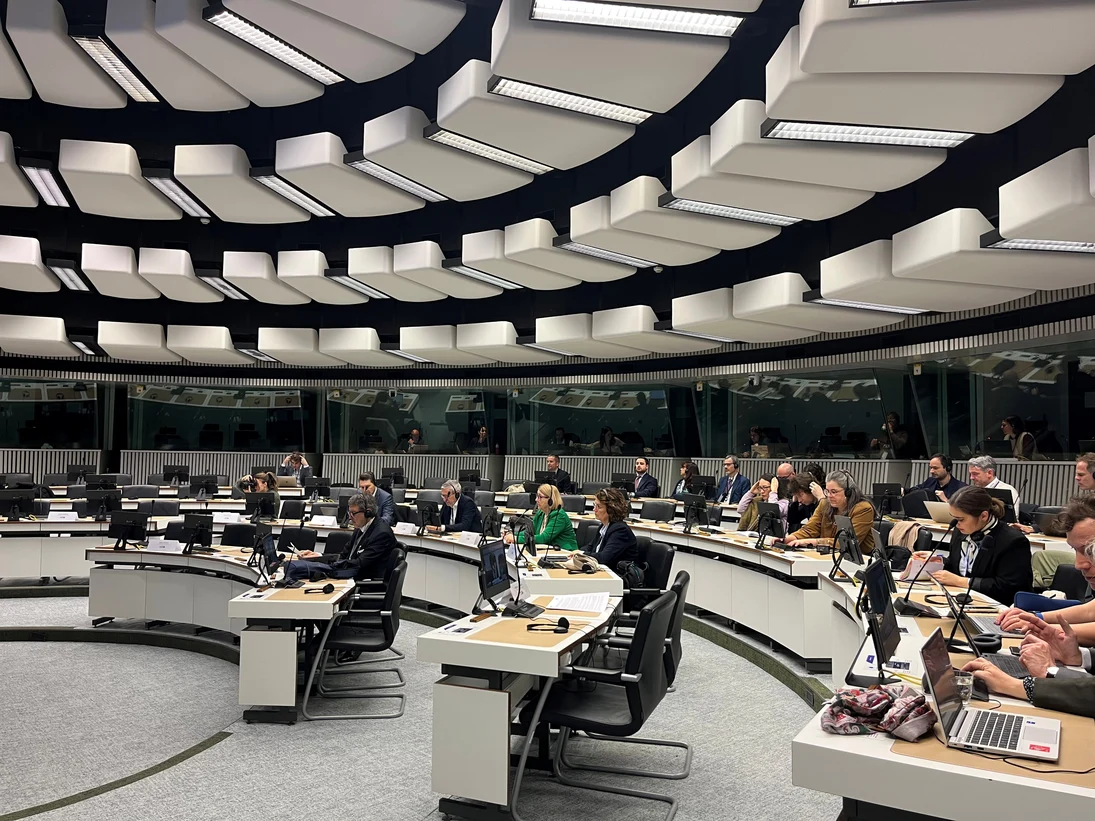
Participants of the CoRAI Meeting on 5 March 2026.
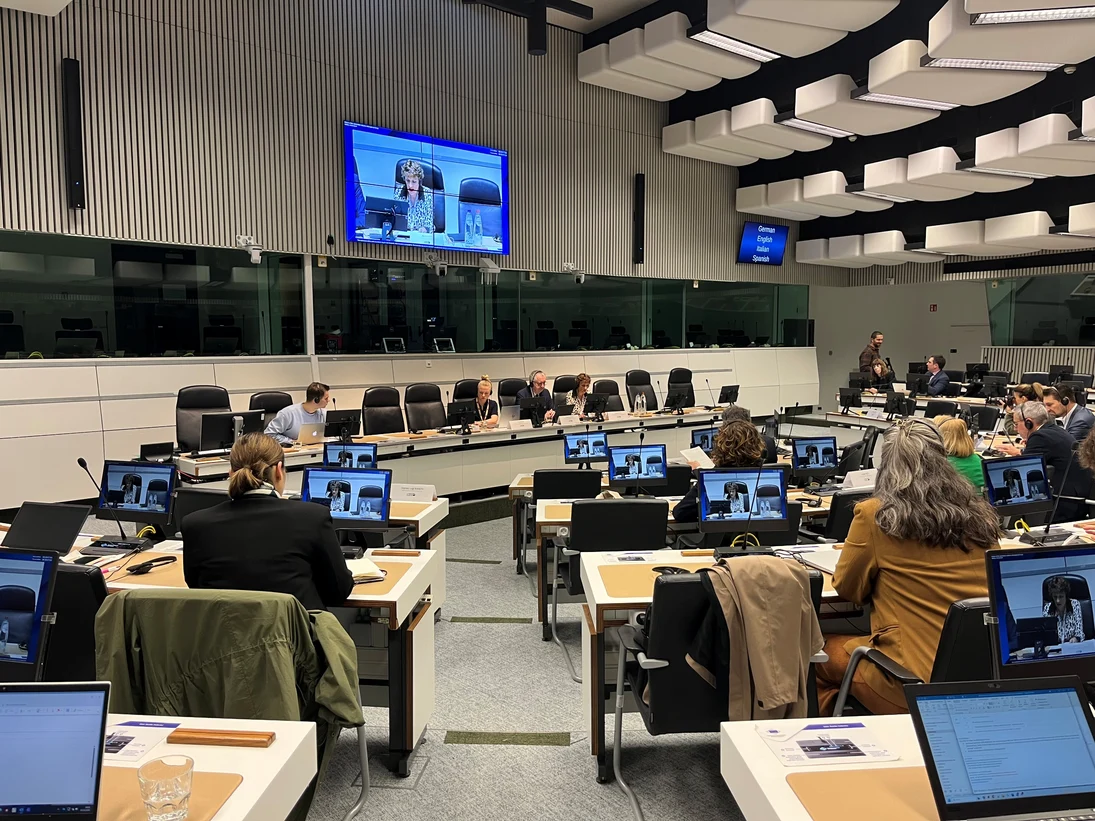
CoRAI Co-Chair María Chivite speaks about the EU Automotive Package.
On 5 March 2026, the first meeting of the European Committee of the Regions’ Automotive Intergroup (CoRAI) this year took place in Brussels. The meeting focused on the EU Automotive Package, which includes measures aimed at strengthening the competitiveness of the European automotive industry and on the adoption of the Strategic Vision of CoRAI.
The meeting was intended by CoRAI Chair Thomas Schmidt (DE/EPP) to serve as a platform for integrating regional contributions into the opinion on the EU Automotive Package. Subsequently, discussions were set to focus on shaping CoRAI’s strategic vision for the 8th mandate period in the CoR, with the aim of defining the group’s unique profile and strengthening its cooperation with the Automotive Regions Alliance (ARA) and the Automotive Skills Alliance (ASA).
New members were also welcomed, including Antje Grotheer (DE/PES), as well as Melanie Walter (DE/PES), who joined CoRAI at the beginning of the year.
In addressing the EU Automotive Package, Thomas Schmidt noted that its publication shortly after the previous meeting provided a solid, though still improvable, foundation. Strong support was reiterated for aligning decarbonization, competitiveness, and industrial resilience. However, it was emphasized that achieving these goals requires genuine technological openness beyond 2035, reliable and practical framework conditions, and significantly increased financial and infrastructural support for regions to safeguard value creation, employment, and industrial sovereignty in Europe.
María Chivite (ES/PES), President of the Government of Navarre, Co-Chair of CoRAI and rapporteur on the CoR opinion on the EU Automotive Package, was invited as keynote speaker to present her views on the Automotive Package.
In her keynote speech María Chivite emphasised that the future of the automotive sector is electric. In this context, stronger cooperation with renewable energy industries will be necessary. At the same time, she underlined that regional perspectives must play a key role in shaping the transformation process.
The decarbonisation of Europe remains a central objective, but it must go hand in hand with economic security and stable framework conditions. In this regard, particular support should be given to the production and sale of small and affordable vehicles.
Therefore, public financial support plays an important role. Without such support, a successful transformation of the sector would not be possible.
Chivite stressed that the transformation should not come at the expense of other sectors. A coherent strategy of the CoR and a common European framework are considered essential for managing the transition effectively.
Despite its ambitions, the EU Automotive Package still presents several challenges.
The Chair of the Intergroup, Thomas Schmidt, explained that there is overall support for the EU’s climate targets. However, he emphasised that greater technological neutrality, a more realistic timeline, stronger involvement of regions and improved financial resources are necessary in order to safeguard the competitiveness and industrial base of the European automotive sector.
During the discussion, Marco Marsilio (IT/ECR) also called for greater technological neutrality and warned against excessive restrictions on alternative fuels.
Uwe Conradt (DE/EPP) focused on the importance of a realistic timeline for the transformation of the automotive industry.
In contrast, Isolde Ries (DE/PES) argued for a faster transformation process and emphasised the need to accelerate the transition towards climate-neutral mobility.
Another topic raised during the discussion was the increasing presence of inexpensive Chinese vehicles on the European market.
The challenges this development may pose for the European automotive industry were addressed. The current situation regarding job losses in parts of the German automotive sector was also discussed. In this context, safeguarding employment was identified as an important objective in the ongoing transformation of the automotive industry.
The chair emphasized the need for an updated strategic vision for CoRAI, highlighting its role since 2009 in connecting Europe’s automotive regions and promoting a competitive, future-oriented industry. As a political driver within the CoR, CoRAI contributes regional perspectives to EU policymaking, fosters exchange among stakeholders, and cooperates closely with the ARA and the ASA. It was underlined that CoRAI should continue to act as a strong voice within the CoR, while also addressing emerging topics such as autonomous driving and sharpening its profile through an updated strategic vision.
The next CoRAI meeting will take place during the December plenary session in 2026. Further details regarding a mid-year online meeting will be communicated to members in due course by the CoRAI Chair, Thomas Schmidt.
adopted at the CoRAI Meeting on 5 March 2026
Thursday, 5th March 2026, 08.00 – 09.00 a.m. at the European Committee of the Regions, VMA 21
Language interpretation: English, German, Italian, Spanish
Main points on the agenda:
1. Opening remarks by the chairman
Thomas SCHMIDT, DE/EPP
President of the Committee of the Regions Automotive Intergroup CoRAI
Head of the German Delegation to the European Committee of the Regions
2. Intervention on the opinion on the EU Automotive Package by
María Victoria CHIVITE NAVASCUÉS, ES/PES
Co-Chair of the Committee of the Regions Automotive Intergroup CoRAI
Rapporteur on the opinion on the EU Automotive Package
President of the Regional Government of Navarre, Spain
For discussion: CoRAI’s contribution to the opinion on the EU Automotive Package
3. For discussion and decision: Strategic Vision of CoRAI for the 8th CoR mandate
4.Closing remarks by the chairman
